

If you are planning a trip to Canada by air and you do not need a full visa, there is a good chance you will need an Electronic Travel Authorization, or eTA. This guide covers everything you need to know about the Canada eTA: what it is, who needs one, how much it costs, how to apply, and what happens if your application is refused.
What Is a Canada eTA?
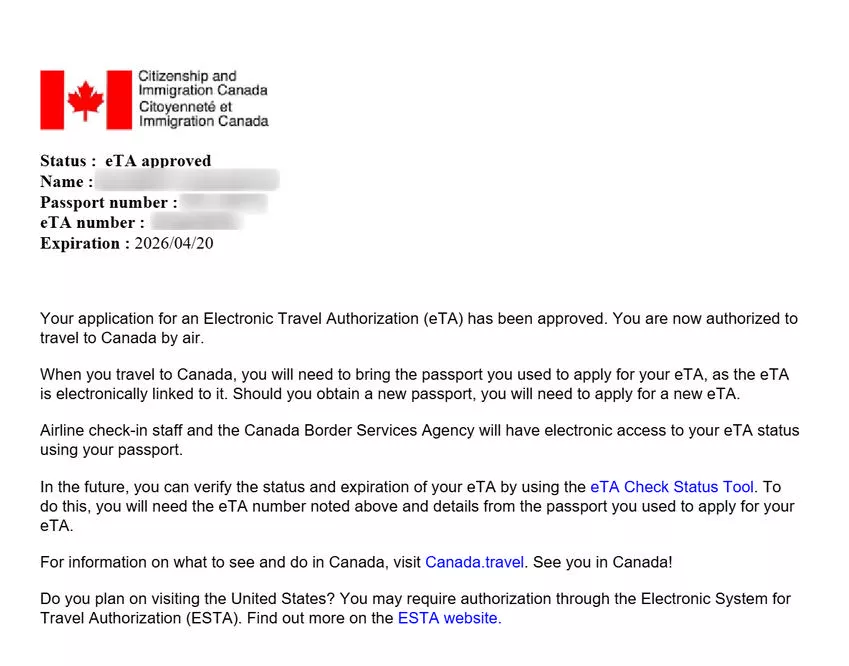
A Canada eTA (Electronic Travel Authorization) is an entry requirement for visa-exempt foreign nationals who are flying to or transiting through a Canadian airport. It is electronically linked to your passport and remains valid for up to five years or until your passport expires, whichever comes first.
The eTA was introduced by Immigration, Refugees and Citizenship Canada (IRCC) in 2015 as a screening tool that pre-screens travellers before they board a flight to Canada. Think of it as a digital travel permit: you apply online, receive approval by email in most cases within minutes, and the authorization is stored electronically against your passport number. There is no stamp, sticker, or physical document to carry.
An eTA does not guarantee entry to Canada. When you arrive at a Canadian port of entry, a border services officer will still verify your identity, ask about the purpose of your visit, and decide whether to admit you. However, without a valid eTA, you will not be allowed to board your flight in the first place.
Who Needs a Canada eTA?
You need a Canada eTA if all of the following apply to you:
- You are a citizen of a visa-exempt country.
- You are travelling to Canada by air.
- You are not a Canadian citizen or permanent resident.
- You do not already hold a valid Canadian visa.
The list of visa-exempt countries includes most European Union member states, the United Kingdom, Australia, New Zealand, Japan, South Korea, and many others. In 2023, Canada expanded the eTA program to include 13 additional countries that were previously visa-required.
Who Does NOT Need an eTA?
The following groups do not need an eTA:
- Canadian citizens and permanent residents – Use your Canadian passport or permanent resident card.
- U.S. citizens – American passport holders can fly to Canada without an eTA. However, U.S. permanent residents (green card holders) who are citizens of another country do need an eTA.
- Holders of a valid Canadian visa – If you already have a visitor visa, study permit, or work permit, you do not need a separate eTA.
- Travellers entering by land or sea – The eTA is required only for air travel. If you are driving from the United States or arriving by boat, you do not need one.
How Much Does a Canada eTA Cost?
The Canada eTA costs CAD $7 per application. This fee is paid online by credit card or debit card at the time you submit your application. There are no additional processing fees when you apply through the official Government of Canada website.
Be cautious of third-party websites that charge significantly more (often $50 to $100 or above) for the same application. These sites may look official but they simply submit the same form on your behalf at a steep markup. Always use the official IRCC website to apply.
Canada eTA Requirements
To apply for a Canada eTA, you will need:
- A valid passport from a visa-exempt country.
- A credit or debit card to pay the CAD $7 fee.
- An email address for receiving your eTA confirmation.
- Basic personal information including your name, date of birth, address, and employment details.
You may also be asked questions about your health, travel history, and any criminal convictions. These questions are part of the screening process and must be answered honestly.
Passport Validity
Your passport does not need to be valid for a specific minimum period beyond your travel dates for the eTA application itself. However, since the eTA is linked to your passport, if your passport expires, your eTA expires with it. Make sure your passport will be valid for the duration of your trip.
How to Apply for a Canada eTA
Applying for a Canada eTA is straightforward and takes most people about 15 to 20 minutes. Here is the step-by-step process:
Step 1: Go to the Official IRCC Website
Navigate to the official Government of Canada eTA application page. You can access it directly through the IRCC website. Avoid any third-party sites that claim to process your eTA faster or with guaranteed approval.
Step 2: Fill Out the Online Form
You will be asked to provide:
- Personal details (full name, date of birth, nationality)
- Passport information (number, country of issue, expiry date)
- Contact information (email address, phone number, home address)
- Employment and travel history
- Background questions about health and criminal history
Take your time and double-check every entry. A small typo in your passport number can result in an invalid eTA or a refusal.
Step 3: Pay the Fee
Submit payment of CAD $7 using a credit card or debit card. The transaction is processed securely through the Government of Canada payment system.
Step 4: Wait for Processing
Most eTA applications are approved within minutes. You will receive a confirmation email with your eTA number. In some cases, additional processing is required, which can take several days. If IRCC needs more information, they will contact you by email with instructions.
Step 5: Check Your Status
If you do not receive an immediate approval, you can check your eTA status online through the IRCC website using your passport number and application details.
For a detailed walkthrough of every field in the application form, see our guide on how to apply for a Canada eTA.
How Long Does a Canada eTA Take to Process?
In the majority of cases, eTA approval comes through within minutes of submitting the application. According to IRCC, over 90 percent of applications are processed automatically and almost instantly.
However, some applications require manual review. This can happen if:
- There is a name match with someone on a watchlist.
- You answered “yes” to any of the background questions.
- Your application triggers a flag in the automated screening system.
Manual review can take anywhere from a few hours to several days. In rare cases, it may take weeks. IRCC recommends applying at least 72 hours before your flight to allow time for any additional processing.
For more detail on processing times and what to do if your application is taking longer than expected, see our guide on Canada eTA processing time.
How Long Is a Canada eTA Valid?
A Canada eTA is valid for up to five years from the date of approval, or until your passport expires – whichever comes first. This means:
- If your passport expires in two years, your eTA is valid for two years.
- If you get a new passport, you must apply for a new eTA.
- Each time you travel to Canada, your eTA must still be valid.
The eTA allows multiple entries into Canada. You do not need to apply for a new eTA each time you visit, as long as the existing one remains valid and linked to your current passport.
Canada eTA vs Visa: What Is the Difference?
The main differences between a Canada eTA and a Canada visitor visa are:
An eTA is simpler, cheaper, and faster to obtain. A visitor visa is required for citizens of countries that are not visa-exempt and involves a more thorough application process that may include biometrics, an interview, and supporting documents.
For a full comparison, see our detailed article on Canada eTA vs visa.
Canada eTA for Specific Nationalities
While the eTA requirement applies to all visa-exempt nationals flying to Canada, the specifics can vary slightly depending on your nationality:
- UK citizens – British passport holders need an eTA to fly to Canada. See our UK citizens guide.
- US citizens – American citizens do not need an eTA. However, US permanent residents with another nationality do. See our US citizens guide.
- Australian citizens – Australian passport holders need an eTA. See our Australian citizens guide.
- Indian citizens – Indian passport holders generally need a visitor visa, not an eTA, unless they meet specific conditions. See our Indian citizens guide.
For the full list of countries whose citizens can apply for an eTA, see our eligible countries guide.
What Happens If Your Canada eTA Is Refused?
A Canada eTA refusal is not the end of the road, but it does mean you cannot fly to Canada using the eTA process. Common reasons for refusal include:
- A criminal record, including DUI convictions.
- Prior immigration violations or overstays in Canada.
- Incomplete or inaccurate information on the application.
- Being flagged in security or criminal databases.
If your eTA is refused, your options include:
- Apply for a visitor visa – The visa application process allows you to provide additional documentation and explanations that the eTA system does not support.
- Apply for Criminal Rehabilitation – If your refusal is due to a criminal record, you may be eligible for criminal rehabilitation, which makes you admissible to Canada again.
- Request a Temporary Resident Permit (TRP) – This allows entry to Canada for a specific period despite inadmissibility.
For more on refusal reasons and next steps, see our guide on Canada eTA refusals.
Canada eTA for Transit
If you are connecting through a Canadian airport on your way to another country, you still need a valid eTA. Canada requires an eTA for all air travellers from visa-exempt countries, even if you are only transiting and not leaving the airport.
The only exception is if you are a U.S. citizen, in which case you do not need an eTA for transit either.
For more information, see our guide on Canada eTA for transit.
Common Canada eTA Mistakes to Avoid
Here are the most frequent errors travellers make with their eTA applications:
- Using a third-party site – Only apply through the official IRCC website. Third-party sites overcharge and may not protect your personal data.
- Entering incorrect passport details – Double-check your passport number, expiry date, and country of issue. A single digit wrong can invalidate your eTA.
- Applying with an expiring passport – If your passport is close to expiry, renew it first, then apply for the eTA. Otherwise your eTA will expire as soon as your passport does.
- Not checking eTA validity before flying – Always verify your eTA status before heading to the airport. Airlines will deny boarding if you do not have a valid eTA.
- Assuming an eTA guarantees entry – The eTA only allows you to board a flight to Canada. A border officer makes the final admission decision.
Frequently Asked Questions
Do I need an eTA if I have a Canadian visa?
No. If you hold a valid Canadian visitor visa, study permit, or work permit, you do not need an eTA. Your visa serves as your travel authorization.
Can I apply for an eTA on behalf of someone else?
Yes. You can submit an eTA application for another person, such as a family member or friend, as long as you have their passport details and permission.
What if my passport expires after I get my eTA?
Your eTA is linked to your passport. If your passport expires, your eTA becomes invalid automatically. You will need to apply for a new eTA with your new passport.
Can I work in Canada with an eTA?
No. An eTA is for tourism, business visits, and transit only. If you want to work in Canada, you need a work permit. If you want to study, you need a study permit.
Is the Canada eTA the same as a visa?
No. An eTA is a lighter, faster authorization for citizens of visa-exempt countries. A visa is a more thorough process for citizens of countries that require one. The eTA costs CAD $7 and is usually approved in minutes; a visitor visa costs CAD $100 and can take weeks.
How do I check if my eTA is still valid?
You can check your eTA status on the IRCC website using your passport number, country of issue, and date of birth.
Can I be denied boarding even with a valid eTA?
Airlines verify your eTA before allowing you to board. If your eTA is valid and linked to the correct passport, you should be allowed to board. However, airlines may also check other requirements such as return tickets and sufficient funds.
What happens at the Canadian border with an eTA?
When you arrive in Canada, a border services officer will examine your passport, ask about your visit, and may request supporting documents such as hotel reservations, return tickets, or proof of funds. The officer makes the final decision on whether to admit you.