

If your flight has a stop in Canada on the way to another country, you need a Canada eTA for transit – even if you never leave the airport. Canada does not have a separate transit visa for air travelers from visa-exempt countries. Instead, the same eTA required for visitors is also required for passengers making a brief layover at a Canadian airport. Understanding the eTA transit rules before you book your flight prevents denied boarding and missed connections.
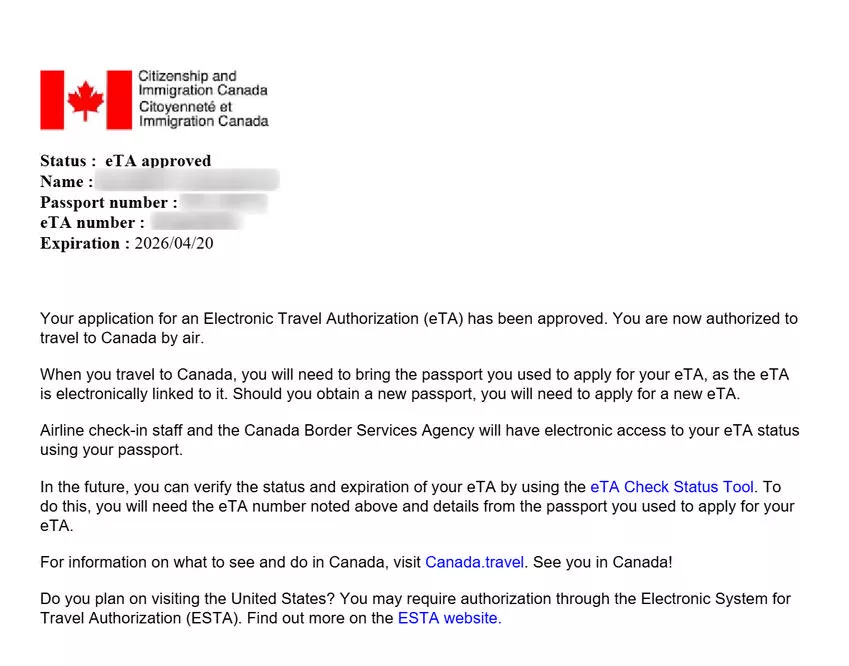
Do You Need an eTA to Transit Through Canada?
Yes. If you are a citizen of a visa-exempt country and your flight stops at a Canadian airport – even if you stay in the transit area and do not pass through customs – you need a valid Canada eTA. The eTA is mandatory for all air travelers from visa-exempt nations who board a flight that lands in Canada, regardless of whether Canada is their final destination.
This requirement applies to:
- Connecting flights through Canadian airports (e.g., flying London to Tokyo via Toronto)
- Technical stops where passengers remain on the aircraft
- Layovers of any duration, from 45 minutes to 12 hours
- Transit without leaving the airport – the eTA is still required
The Canadian government treats transit passengers the same as visitors for eTA purposes. There is no separate “transit eTA” – you apply for the same CAD $7 eTA that a tourist would use.
Key fact: Canada does not offer a transit-without-visa (TWOV) program for citizens of visa-required countries in the same way some other nations do. If you are from a visa-required country, you generally need either a valid Canadian visa or may qualify for special transit programs.
Which Countries’ Citizens Need an eTA for Transit?
Citizens of all visa-exempt countries need an eTA to transit through Canada by air. This includes nationals of countries that are part of Canada’s eTA program.
| Region | Countries Requiring eTA for Transit |
|---|---|
| Europe | United Kingdom, France, Germany, Italy, Spain, Netherlands, Belgium, Sweden, Norway, Denmark, Switzerland, Austria, Poland, Portugal, Greece, Ireland, and all other EU/Schengen states |
| Asia-Pacific | Japan, South Korea, Australia, New Zealand, Hong Kong, Taiwan, Singapore, Malaysia, Brunei |
| Americas | Mexico, Brazil, Chile, Argentina, Costa Rica, Panama, Uruguay, Bahamas, Barbados, Trinidad and Tobago |
| Middle East/Africa | Israel, UAE, Saudi Arabia, Kuwait, Qatar, Oman, Bahrain, Seychelles, Mauritius |
Citizens of the United States are exempt from the eTA requirement – US passport holders can transit through Canada with just their valid US passport. Lawful permanent residents of the US (green card holders) are also eTA-exempt for transit.
What If You Are from a Visa-Required Country?
If you are from a visa-required country, you cannot use an eTA for transit. You need one of the following:
- A valid Canadian Temporary Resident Visa (TRV) – allows transit and entry
- A transit visa – available for some nationalities making same-day connections through specific Canadian airports
- An eTA (if newly eligible) – Canada has expanded eTA eligibility to some previously visa-required countries, including Brazil, Mexico, and several others. Check your eligibility before applying
China Transit Program: Citizens of the People’s Republic of China holding a valid US visa may transit through specific Canadian airports (Vancouver, Toronto, Montreal) without a Canadian visa, under the China Transit Program. This program has strict conditions – you must remain in the transit area and continue on the same day to or from the United States.
Transit Without Visa (TWOV) Program: Nationals of certain countries holding valid US visas or green cards may transit through Vancouver (YVR), Toronto (YYZ), or Montreal (YUL) without a Canadian visa. Eligibility depends on nationality, airline, and routing.
| Program | Eligibility | Airports |
|---|---|---|
| China Transit Program | Chinese citizens with valid US visa | Vancouver, Toronto, Montreal |
| TWOV | Select nationalities with valid US visa/green card | Vancouver, Toronto, Montreal |
| eTA | Visa-exempt nationals | All Canadian airports |
How to Apply for a Canada eTA for Transit
Applying for a Canada eTA for transit is identical to applying for an eTA for tourism. There is no separate transit application form, no different fee, and no different processing time. The same eTA serves all purposes – tourism, business, and transit.
Steps to apply:
- Have your passport ready – you need a valid passport from a visa-exempt country
- Go to the official IRCC website at canada.ca/eta
- Fill out the online form – personal details, passport information, travel history
- Pay CAD $7 by credit or debit card
- Receive approval by email – usually within minutes, occasionally up to 72 hours
What you need for the application:
- Valid passport from a visa-exempt country
- Credit or debit card for the CAD $7 fee
- Email address
- Basic personal and employment information
Processing time: Most eTA applications are approved within minutes. However, some applications require additional documents and can take several days. Apply well before your travel date – do not wait until you are at the airport.
Can You Leave the Airport During a Layover in Canada?
Yes, you can leave the airport during a layover in Canada if you have a valid eTA. The eTA authorizes entry into Canada, not just transit. This means during a long layover you can:
- Exit the airport and explore the city
- Visit friends or family nearby
- Stay in a hotel if your connection is the next day
- Pass through customs and immigration as a visitor
However, there are important considerations:
- You must clear Canadian customs and immigration to leave the airport. This is the same process as arriving in Canada as a visitor
- A border services officer will determine your admissibility – having an eTA does not guarantee entry
- You must have enough time between flights to clear customs, leave the airport, return, and go through security again
- Re-entry to the secure area requires going through security screening again, and potentially customs on departure
Practical advice for layovers:
| Layover Length | Can You Leave the Airport? | Recommendation |
|---|---|---|
| Under 2 hours | Technically yes, but impractical | Stay in the airport |
| 2-4 hours | Risky – tight timing | Stay in the airport unless connection is delayed |
| 4-8 hours | Yes, with good planning | Consider a short city visit |
| 8+ hours | Yes, comfortable | Explore the city or book a hotel |
| Overnight | Yes | Book a hotel near the airport |
Do Children Need an eTA to Transit Through Canada?
Yes. All travelers, including infants and children, need their own eTA to transit through Canada by air. There are no age exemptions for the eTA requirement.
For children transiting through Canada:
- Each child must have their own passport and their own eTA
- Parents or guardians complete the eTA application on behalf of the child
- The child’s passport information must be accurate – errors result in denied boarding
- Children traveling with only one parent should carry a consent letter from the other parent, though this is not an eTA requirement
eTA applications for children cost the same CAD $7 as adult applications. Processing times are the same – usually minutes, occasionally up to 72 hours.
What Happens If You Transit Through Canada Without an eTA?
If you attempt to transit through Canada without a valid eTA, the airline will deny you boarding at your departure airport. The eTA check happens at check-in or gate boarding – not when you arrive in Canada.
The consequences of not having an eTA for transit:
- Denied boarding – the airline scans your passport and checks the eTA database before letting you board. If no valid eTA is found, you cannot board
- Missed connection – if your connecting flight is through Canada and you cannot board the first leg, your entire itinerary is disrupted
- No refund obligation – airlines are generally not required to refund tickets if you were denied boarding due to missing travel documents
- No on-arrival eTA – you cannot apply for an eTA at the airport. It must be approved before you travel
This is why applying for an eTA well before your travel date is essential. Even if most applications are approved in minutes, some take days. If your application requires additional documents, you need time to provide them.
Canada eTA Transit vs. Other Countries’ Transit Rules
Canada’s eTA transit requirement is stricter than transit rules in many other countries. Several nations allow visa-exempt travelers to transit without any additional authorization, or offer a separate, simpler transit document.
| Country | Transit Requirement for Visa-Exempt | Fee | Processing |
|---|---|---|---|
| Canada | eTA (same as visitor) | CAD $7 | Minutes to 72 hours |
| United States | ESTA (same as visitor) | USD $21 | Minutes to 72 hours |
| Australia | ETA (same as visitor) | AUD $20 | Minutes |
| United Kingdom | Generally no transit document needed for visa-exempt | Free | N/A |
| Schengen Area | Generally no transit document needed for visa-exempt | Free | N/A |
The key takeaway: countries in North America and Oceania tend to require the same travel authorization for transit as for entry, while European countries generally do not impose additional requirements on visa-exempt transit passengers.
Frequently Asked Questions About Canada eTA Transit
Do I need an eTA if I am just changing planes in Canada and never leave the airport?
Yes. If you are from a visa-exempt country, you need a valid eTA even if you stay in the transit area of the Canadian airport and never pass through customs. Canada requires an eTA for all air travelers from visa-exempt nations whose flights land in Canada, regardless of whether they enter the country or remain in transit.
Is there a separate transit eTA or transit visa for Canada?
No. There is no separate transit eTA. Citizens of visa-exempt countries use the same eTA for transit as for visiting. The cost is CAD $7, and the application process is identical. For citizens of visa-required countries, a transit visa or regular TRV may be needed depending on nationality and routing.
Can I apply for an eTA at the airport if I am transiting?
No. An eTA must be approved before you travel. You cannot apply at the airport or at the gate. If you arrive at the airport without a valid eTA, the airline will deny you boarding. Apply online at canada.ca/eta at least 72 hours before your flight.
I have a US green card – do I need an eTA to transit through Canada?
No. Lawful permanent residents of the United States are exempt from the eTA requirement when transiting through Canada. You can transit with your valid passport and US green card. However, if you are from a visa-required country and are not a US permanent resident, different rules apply.
Can I leave the airport during a layover in Canada with an eTA?
Yes. A valid eTA allows you to enter Canada, not just transit. You can leave the airport during a long layover. However, you must clear customs and immigration, and a border services officer will determine your admissibility. Make sure you have enough time to return for your connecting flight.
Do I need an eTA for a technical stop in Canada where I do not get off the plane?
Yes. Even if you remain on the aircraft during a technical stop at a Canadian airport, you technically need a valid eTA if you are from a visa-exempt country. Airlines typically verify eTA status for all passengers on flights that touch Canadian soil.
What if my eTA application is not approved before my transit flight?
If your eTA is not approved before your departure, you will not be able to board your flight to Canada. You may need to rebook through a different routing that does not transit through Canada. If your application requires additional documents, respond to IRCC requests as quickly as possible.
Does my eTA for transit also allow me to visit Canada?
Yes. The eTA is the same document whether you use it for transit or for visiting Canada. If you decide during your layover that you want to leave the airport and explore, your eTA allows you to do so. There is no restriction on using a “transit eTA” for tourism purposes.
How long can I stay in Canada during a transit layover?
An eTA allows stays of up to six months per entry, but during a transit layover, you should plan to stay only as long as needed before catching your connecting flight. The border services officer determines your authorized length of stay. For transit, you are expected to continue your journey promptly.
I am flying from the UK to Mexico with a stop in Toronto – do I need an eTA?
Yes. As a UK citizen, you need a valid eTA to transit through Toronto even though your destination is Mexico. The eTA requirement applies to all flights landing in Canada, regardless of your final destination. Apply online at canada.ca/eta before your travel date.
Can I transit through Canada with an expired eTA?
No. Your eTA must be valid on the date you transit through Canada. If your eTA has expired, you need to apply for a new one before traveling. Check your eTA status at canada.ca/eta if you are unsure of the expiry date.
Do US citizens need an eTA to transit through Canada?
No. US passport holders do not need an eTA to transit through Canada. You can transit with just your valid US passport. This exemption applies to all US citizens, whether transiting or visiting.