

If you are flying to Canada and you are not a Canadian citizen or permanent resident, you may need an Electronic Travel Authorization (eTA) before you board your flight. The eTA program applies to citizens of visa-exempt countries, and since 2023 it has also been extended to nationals of several countries that previously required a full visa. This page provides a complete list of eTA-eligible countries, explains who needs an eTA and who does not, and answers the most common questions about eligibility.
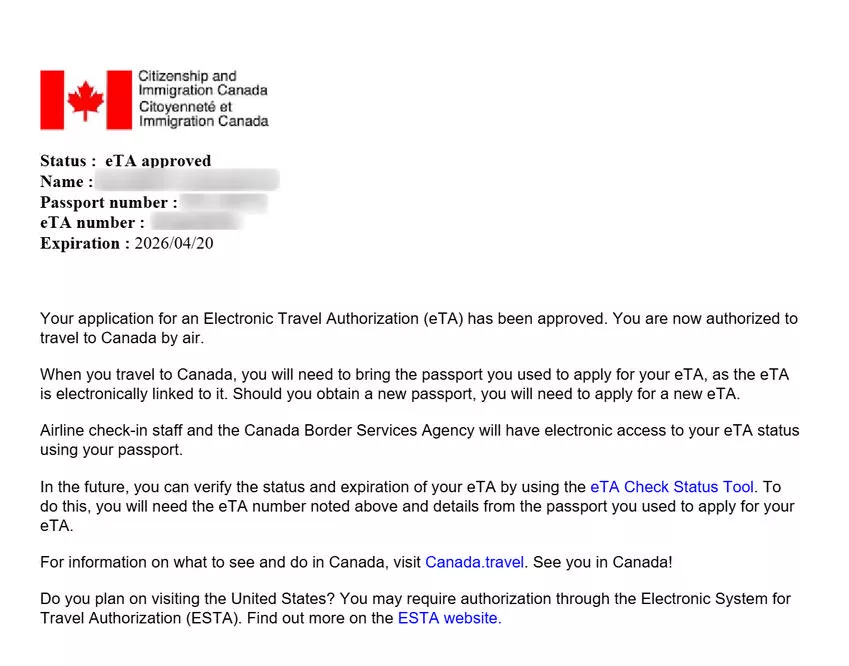
What Does “eTA-Eligible” Mean?
A country is eTA-eligible if its citizens can travel to Canada by air with just an Electronic Travel Authorization instead of a full visitor visa. There are two categories of eTA-eligible travellers:
- Visa-exempt nationals – Citizens of countries that have a visa exemption agreement with Canada. These travellers have been able to fly to Canada without a visa for years and were required to obtain an eTA starting in 2016.
- Newly eligible nationals – Citizens of 13 countries that were added to the eTA program in 2023. These travellers previously needed a full visitor visa but can now apply for an eTA if they have held a Canadian visa in the past 10 years or currently hold a valid U.S. nonimmigrant visa.
Both groups apply through the same online process and pay the same CAD $7 fee.
Complete List of eTA-Eligible Countries
The following table lists all countries whose citizens are eligible for a Canada eTA when travelling by air. This list is current as of 2026 and reflects the most recent expansion of the eTA program.
| Region | Countries |
|---|---|
| Europe | Andorra, Austria, Belgium, Bulgaria, Croatia, Cyprus, Czech Republic, Denmark, Estonia, Finland, France, Germany, Greece, Hungary, Iceland, Ireland, Italy, Latvia, Liechtenstein, Lithuania, Luxembourg, Malta, Monaco, Netherlands, Norway, Poland, Portugal, Romania, San Marino, Slovakia, Slovenia, Spain, Sweden, Switzerland, United Kingdom |
| Asia-Pacific | Australia, Brunei, Hong Kong (SAR passport), Japan, Malaysia, New Zealand, Papua New Guinea, Samoa, Singapore, Solomon Islands, South Korea, Taiwan (ordinary passport) |
| Americas | Bahamas, Barbados, British Overseas Territories (Bermuda, British Virgin Islands, Cayman Islands, Turks and Caicos), Chile, Costa Rica, Mexico, Panama, Saint Kitts and Nevis |
| Middle East & Africa | Israel, United Arab Emirates |
| Newly eligible (2023) | Antigua and Barbuda, Argentina, Brazil, Morocco, Philippines, St. Lucia, Seychelles, Thailand, Trinidad and Tobago, Uruguay |
Total: approximately 65+ countries and territories.
The 13 countries added in 2023 have specific conditions. Nationals of these countries qualify for an eTA only if they have held a Canadian temporary resident visa at any point in the 10 years preceding their application, or if they currently hold a valid U.S. nonimmigrant visa. If neither condition is met, they still need to apply for a regular visitor visa.
Who Needs a Canada eTA?
You need a Canada eTA if all of the following conditions apply to you:
- You are a citizen of one of the eTA-eligible countries listed above.
- You are travelling to Canada by air (including transit through a Canadian airport).
- You are not a Canadian citizen or permanent resident.
- You do not already hold a valid Canadian visa, study permit, or work permit.
An eTA costs CAD $7 and is valid for up to five years or until your passport expires. In most cases, approval comes within minutes of submitting the online application.
U.S. Citizens and Permanent Residents
U.S. citizens do not need an eTA or a visa to fly to Canada. They can enter with a valid U.S. passport. However, U.S. permanent residents (green card holders) who are citizens of another country do need an eTA if their citizenship country is on the eTA-eligible list. They must carry their green card and the passport from their country of citizenship.
Canadian Citizens and Permanent Residents
Canadian citizens cannot apply for an eTA and do not need one. You must travel on a valid Canadian passport. Canadian permanent residents should carry their permanent resident card or a valid permanent resident travel document.
The 2023 eTA Expansion: 13 New Countries
In June 2023, Canada expanded the eTA program to citizens of 13 countries that were previously visa-required. This was a significant change aimed at reducing processing times and making travel to Canada more accessible for low-risk travellers from these nations.
The newly eligible countries are:
- Antigua and Barbuda
- Argentina
- Brazil
- Morocco
- Philippines
- Saint Lucia
- Seychelles
- Thailand
- Trinidad and Tobago
- Uruguay
Important conditions for the 2023 expansion:
To qualify for an eTA instead of a visa, citizens of these countries must meet one of the following criteria:
- They have held a Canadian temporary resident visa (visitor visa) at any point in the past 10 years.
- They currently hold a valid U.S. nonimmigrant visa.
If neither condition applies, the traveller must still apply for a standard Canadian visitor visa through the normal process. This condition is automatically checked during the eTA application – the system will verify your travel history against IRCC records.
How to Check if Your Country Is Eligible
The fastest way to check your eligibility is to visit the official Government of Canada eTA website and begin the application process. The system will ask for your citizenship and travel details and will immediately tell you whether you need an eTA, a visa, or neither.
You can also check by:
- Looking at the country list on this page.
- Contacting the nearest Canadian embassy or consulate.
- Calling the IRCC Client Service Centre.
Countries That Require a Visa (Not Eligible for eTA)
If your country is not on the eTA-eligible list, you need to apply for a Temporary Resident Visa (TRV), commonly called a visitor visa. This applies to citizens of most countries in Africa, the Middle East, South Asia, and Southeast Asia. Some notable countries that require a visa include:
- India
- China
- Pakistan
- Bangladesh
- Nigeria
- Egypt
- Saudi Arabia
- Vietnam
- Indonesia
- Colombia
The visitor visa application process is more involved than an eTA. It typically requires biometrics, supporting documents such as bank statements and invitation letters, and processing times can range from a few weeks to several months. You can find detailed requirements on the IRCC website.
eTA for Transit Through Canada
Even if you are not staying in Canada and are only passing through a Canadian airport on your way to another country, you still need an eTA if your citizenship country is on the eTA-eligible list. This is because Canada requires all air travellers to clear immigration, even for connecting flights.
If your country requires a visa, you may qualify for a transit without visa (TWOV) exemption if you are transiting through specific Canadian airports on your way to or from the United States. This is a separate program with its own eligibility rules.
Dual Citizens and Special Cases
Dual citizens who hold Canadian citizenship as one of their nationalities cannot use an eTA. You must travel on a valid Canadian passport. If you also hold citizenship of a visa-exempt country, you cannot use that passport to apply for an eTA to enter Canada.
Refugee travel document holders are generally not eligible for an eTA regardless of the issuing country. You should contact IRCC to determine what entry document you need.
Holders of diplomatic or official passports may have different requirements depending on bilateral agreements between Canada and the issuing country. Check with the Canadian embassy for your specific situation.
eTA Processing Times and Validity
Most eTA applications are approved within minutes. In some cases, additional documentation may be requested, which can extend processing to several days. Once approved:
- The eTA is valid for up to five years or until your passport expires, whichever comes first.
- You can use the same eTA for multiple trips to Canada during its validity period.
- There is no need to print anything – the eTA is electronically linked to your passport.
When you check in for your flight, the airline will verify your eTA status against your passport number. If you do not have a valid eTA, you will not be allowed to board.
Frequently Asked Questions
How do I know if my country is eTA-eligible?
Check the complete list on this page. If your country appears in the tables above, you are eligible to apply for an eTA when flying to Canada. If your country is not listed, you need a visitor visa.
Can I apply for an eTA if I have never been to Canada?
Yes, if you are a citizen of a visa-exempt country, you can apply for an eTA regardless of whether you have visited Canada before. For the 13 countries added in 2023, you must have held a Canadian visa in the past 10 years or currently hold a valid U.S. visa.
What happens if my country is removed from the eTA-eligible list?
Canada can change the eTA-eligible country list at any time. If your country is removed, your existing eTA would no longer be valid and you would need to apply for a visitor visa for future trips. However, changes to the list are announced in advance and are uncommon.
Do children and infants need their own eTA?
Yes. Every traveller, regardless of age, needs their own eTA if they are a citizen of an eTA-eligible country. This includes infants and children. A parent or guardian can apply on behalf of a minor.
Can I work or study in Canada with an eTA?
An eTA alone does not authorize you to work or study in Canada. It is for tourism, business visits, and transit only. If you plan to work or study, you need a separate work permit or study permit. However, you may still need an eTA in addition to your permit if your country is eTA-eligible.
I have a valid Canadian visa. Do I still need an eTA?
No. If you already hold a valid Canadian visitor visa, work permit, or study permit, you do not need a separate eTA. The visa or permit serves as your travel authorization for the purpose it was issued for.