

Planning a trip to Canada? The two main travel authorizations – the Electronic Travel Authorization (eTA) and the visitor visa – serve different purposes and apply to different travellers. This guide explains every key difference so you can determine which one you need.
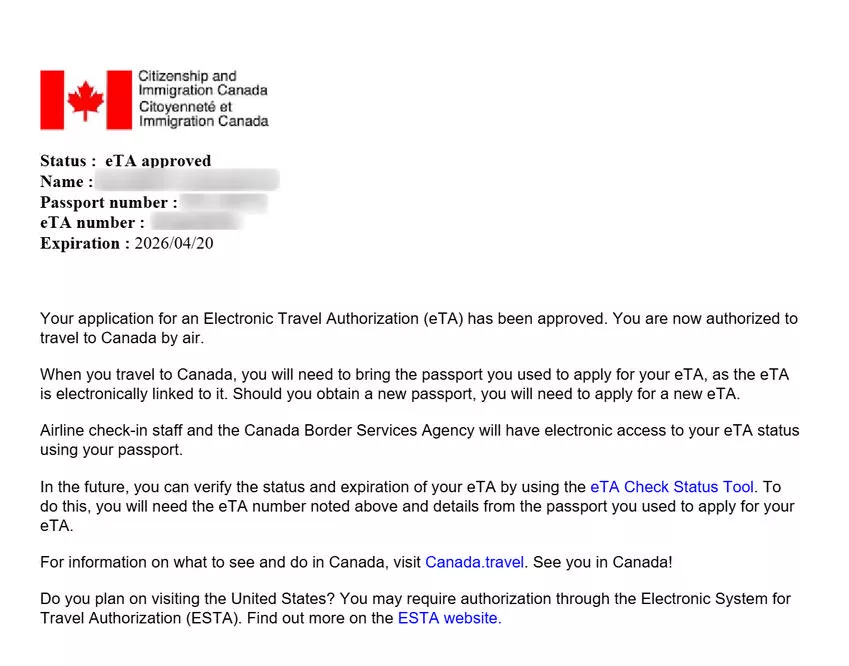
Quick Overview: eTA vs Visa at a Glance
| Feature | eTA | Visitor Visa |
|---|---|---|
| Fee | CAD $7 | CAD $100 |
| Processing time | Minutes to a few days | Weeks to months |
| Validity | Up to 5 years | Up to 10 years |
| Who needs it | Visa-exempt nationals | Visa-required nationals |
| Application method | Online only | Online or paper |
| Biometrics required | No | Yes (ages 14-79) |
| Travel mode | Air only | Air, land, or sea |
| Maximum stay | 6 months per visit | 6 months per visit |
| Work permitted | No | No |
What Is the Canada eTA?
The eTA is a lightweight electronic screening document. Canada introduced it in 2015 to pre-screen travellers from visa-exempt countries before they board a flight. It costs just CAD $7 and most applicants receive approval by email within minutes.
Key characteristics:
- Linked electronically to your passport – no stamp or sticker needed
- Valid for up to five years or until your passport expires
- Required only when flying to Canada (not for land or sea entry)
- Entire application process takes place online
What Is a Canada Visitor Visa?
A visitor visa (also called a Temporary Resident Visa or TRV) is a physical sticker placed in your passport. It is required for citizens of countries that are not visa-exempt. The application is more involved, often requiring biometrics, supporting documents, and longer processing times.
Key characteristics:
- Physical visa counterfoil placed in your passport
- Valid for up to 10 years (multiple entry) or for a single entry
- Required for air, land, and sea travel to Canada
- Application can be submitted online or on paper at a visa application centre
Who Needs Which One?
You need an eTA if:
- You are a citizen of a visa-exempt country (UK, Australia, France, Germany, Japan, South Korea, and others)
- You are flying to Canada
- You are not a Canadian citizen or permanent resident
- You do not already hold a valid Canadian visa
You need a Visitor Visa if:
- You are a citizen of a visa-required country
- You are travelling to Canada by any method (air, land, or sea)
- You do not qualify for any exemption
You need neither if:
- You are a Canadian citizen (enter on your Canadian passport)
- You are a Canadian permanent resident (use your PR card)
- You are a US citizen (passport alone is sufficient)
Side-by-Side Comparison
Application Process
The eTA application is simple and fast. You fill out a short online form with your passport details, answer a few background questions, pay CAD $7, and usually receive approval within minutes.
The visitor visa process is more demanding. You must complete detailed forms, provide supporting documents (bank statements, employment letters, travel itinerary), give biometrics (fingerprints and photo), and wait weeks or months for a decision.
Cost Difference
| Item | eTA | Visitor Visa |
|---|---|---|
| Application fee | CAD $7 | CAD $100 |
| Biometrics fee | Not required | CAD $85 |
| Total cost | CAD $7 | Up to CAD $185 |
The eTA is roughly 26 times cheaper than a visitor visa with biometrics.
Processing Time
| Authorization | Typical Processing |
|---|---|
| eTA | Minutes to 72 hours |
| Visitor Visa | 2 weeks to several months |
Processing times for visitor visas vary significantly by country and time of year. Apply well in advance of your travel date.
Validity Period
Both the eTA and visitor visa can be valid for multiple visits, but the durations differ:
- eTA: Valid for up to 5 years or until your passport expires
- Visitor Visa: Can be valid for up to 10 years (multiple-entry visa)
In both cases, each stay in Canada is limited to a maximum of six months.
Travel Mode Restrictions
This is one of the most important distinctions:
- eTA: Only required for air travel. If you are driving from the US or arriving by boat, you do not need an eTA.
- Visitor Visa: Required for all modes of travel – air, land, and sea.
Biometrics
- eTA: No biometrics required. The entire process is online.
- Visitor Visa: Most applicants aged 14 to 79 must provide biometrics (fingerprints and a photograph) at a Visa Application Centre.
Can You Switch From One to the Other?
If you are from a visa-exempt country and hold an eTA, you do not need a visa. If your country requires a visa, you cannot substitute an eTA for it.
However, there are some situations where the lines blur:
- Visa-exempt nationals who were previously denied a visa may still apply for an eTA if their country is visa-exempt
- Dual citizens who hold citizenship in both a visa-exempt and visa-required country should use their visa-exempt passport and apply for an eTA
- US permanent residents (green card holders) from visa-required countries may be exempt from the visa requirement in some cases
What Both Authorizations Have in Common
Despite their differences, the eTA and visitor visa share several important features:
- Neither guarantees entry. A border services officer makes the final decision at the port of entry.
- Neither authorizes work. Both are for tourism, visiting family, business meetings, and transit only.
- Maximum six-month stay. Both allow stays of up to six months per visit.
- Extension possible. You can apply to extend your stay from within Canada under either authorization.
- Multiple entries. Both can allow multiple entries during their validity period.
How to Determine Which One You Need
Follow these steps:
- Check your citizenship. Look up whether your country is visa-exempt for Canada.
- Check your travel method. If flying and visa-exempt, you need an eTA. If driving or arriving by boat and visa-exempt, you need neither.
- If your country is visa-required, apply for a visitor visa regardless of how you travel.
- If you hold dual citizenship, use the passport that gives you the best entry option.
Special Situations
Transit Through Canada
If you are connecting through a Canadian airport on your way to another country, you still need an eTA (if visa-exempt) or a transit visa (if visa-required). Canada’s Transit Without Visa (TWOV) program has limited exceptions for citizens of certain countries.
Studying in Canada
Neither the eTA nor a visitor visa authorizes you to study for more than six months. For longer programs, you need a study permit.
Working in Canada
Both the eTA and visitor visa prohibit employment. To work in Canada, you need a valid work permit regardless of your eTA or visa status.
Travelling with Children
Children from visa-exempt countries need their own eTA. Children from visa-required countries need their own visitor visa. Each child must have a separate authorization linked to their individual passport.
Frequently Asked Questions
Can I apply for both an eTA and a visa?
You only need one or the other, not both. If your country is visa-exempt, apply for an eTA. If it is visa-required, apply for a visitor visa. Holding a valid visitor visa means you do not need an eTA.
Is the eTA a visa?
No. The eTA is not a visa. It is a separate travel authorization for citizens of visa-exempt countries. It does not appear in your passport and is linked electronically to your passport number.
Which is easier to get – eTA or visa?
The eTA is significantly easier. The online application takes about 10 minutes, costs CAD $7, and most approvals arrive within minutes. The visitor visa process requires more documents, biometrics, and weeks of processing time.
Do I need an eTA if I already have a valid Canadian visa?
No. If you hold a valid Canadian visitor visa, you do not need an eTA. The visa alone authorizes you to travel to Canada.
Can a visa be denied even if my country is visa-exempt?
Your country’s visa-exempt status means you do not need a visa – you apply for an eTA instead. An eTA can still be denied if you have a criminal record, health concerns, or other inadmissibility issues. However, eTA denials are relatively rare.
Do I need a visa or eTA if I am a US permanent resident?
If you are a US green card holder, you do not need an eTA or visa to fly to Canada. You need your valid green card and a valid passport from your country of citizenship. However, if you are not a green card holder and your country requires a visa, you must apply for one.
What if my eTA is about to expire?
You can apply for a new eTA at any time. There is no need to wait for the old one to expire. If your passport has changed, you must apply for a new eTA regardless.
Does an eTA or visa affect how long I can stay in Canada?
No. Both allow stays of up to six months per visit. The border services officer at the port of entry decides the exact length of your authorized stay.
Summary
The eTA and visitor visa are two different paths to the same destination. The eTA is a fast, cheap, online-only option for citizens of visa-exempt countries who are flying to Canada. The visitor visa is a more involved process for citizens of visa-required countries, covering all travel methods. Know your citizenship, check the requirements, and apply well before your trip.