

Getting a Canada eTA refusal is frustrating, especially when you have already booked flights or planned your trip. The good news is that a refusal is not permanent – you can address the issue and reapply. This guide explains every reason your eTA might be refused, what to do next, and how to improve your chances of approval.
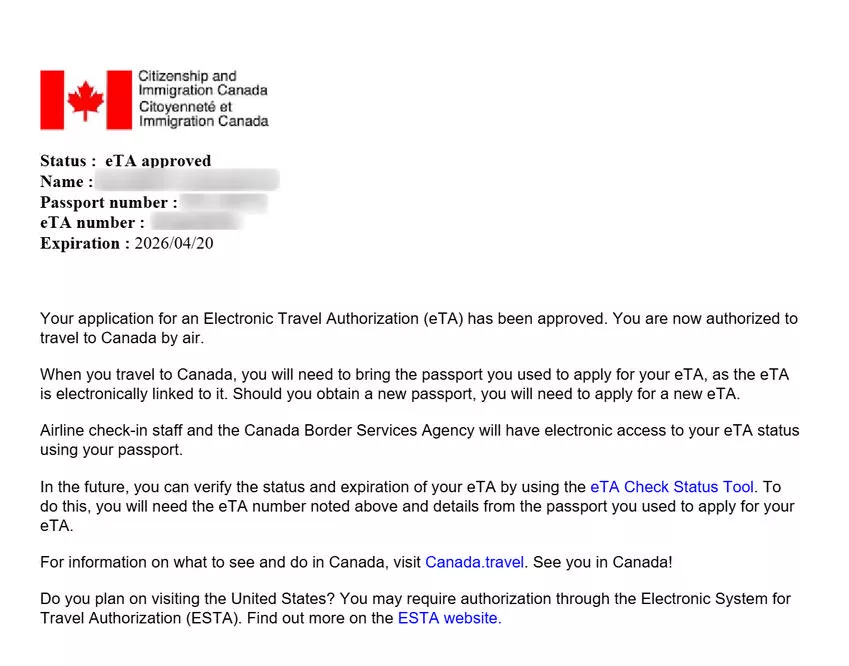
Why Was My Canada eTA Refused?
Immigration, Refugees and Citizenship Canada (IRCC) refuses eTA applications when the applicant does not meet the requirements for entry to Canada. The system runs automated checks against Canadian immigration databases, criminal records, and security watchlists. If something flags during these checks, the application is refused.
Unlike a visitor visa, there is no interview or detailed case review for an eTA. The automated system makes the initial decision, and a refused eTA means the system found a reason to deny it. In some cases, a manual review follows, but many refusals are final until the underlying issue is resolved.
Key point: A refused eTA does not mean you are permanently banned from Canada. It means the system could not confirm your eligibility at this time.
Common Reasons for Canada eTA Refusal
Understanding why eTAs get refused helps you avoid the same mistakes. Here are the most frequent reasons.
Criminal Inadmissibility
This is the single most common reason for eTA refusal. Canada considers anyone with a criminal record potentially inadmissible. Even minor offences – such as a DUI (driving under the influence), petty theft, or assault – can trigger a refusal.
Canada checks applicants against the Canadian Police Information Centre (CPIC) database and international law enforcement databases. If your name or passport number matches a record, the eTA is refused.
Common offences that lead to refusal:
- DUI or DWI (driving while intoxicated)
- Drug possession or trafficking
- Theft or shoplifting
- Assault or domestic violence
- Fraud or financial crimes
- Any offence that would be a criminal act under Canadian law
Even if the offence happened years ago, or in another country, it can still cause a refusal.
Previous Immigration Violations
If you have overstayed a visa in Canada, worked without authorization, violated the terms of a previous visit, or been deported or removed from Canada, your eTA will likely be refused. IRCC keeps detailed records of all immigration violations.
Examples of immigration violations:
- Overstaying a visitor visa or work permit
- Working in Canada without a valid work permit
- Providing false information on a previous application
- Being issued a removal order
- Failing to leave Canada after a visa expired
Health-Related Grounds
Canada can refuse entry to individuals who pose a danger to public health or who might cause excessive demand on health or social services. While this is more common for permanent residence applications, it can affect eTA approvals in certain cases.
Health-related refusal triggers:
- Active tuberculosis
- Untreated communicable diseases
- Conditions that require ongoing costly medical treatment
Security Concerns
Applications are checked against security watchlists. If your name matches an entry on a security database, the eTA will be refused. This can happen due to a genuine match or a false positive – someone with a similar name or date of birth.
Security-related factors:
- Association with organizations deemed threats to Canadian security
- Previous involvement in espionage, terrorism, or subversion
- Name matching a watchlist entry (even as a false positive)
Incomplete or Incorrect Application
Sometimes refusals happen because the information provided does not match official records or because the application contains errors.
Common application errors:
- Passport number entered incorrectly
- Name does not match passport exactly (missing middle name, different spelling)
- Date of birth is wrong
- Wrong passport country selected
- Passport is damaged or expired
Previous Visa or eTA Refusal
If you were previously refused a Canadian visa or eTA, that refusal is on record. Applying again without addressing the original reason for refusal will almost certainly result in another refusal.
What Happens After a Canada eTA Refusal?
When your eTA is refused, you receive an email notification from IRCC. The email does not always explain the specific reason for the refusal. This lack of detail is intentional – IRCC does not disclose the exact database match or reason for security and privacy grounds.
What you receive:
- An email confirming the refusal
- No detailed explanation of the reason
- No right to appeal the eTA decision directly
What you do NOT receive:
- A refund of the CAD $7 application fee
- A list of steps to fix the problem
- A timeline for when you can reapply
Can You Appeal a Canada eTA Refusal?
There is no formal appeal process for a refused eTA. Unlike a visitor visa refusal, where you can request a judicial review, an eTA refusal is a straightforward administrative decision with limited recourse.
However, you are not out of options. You can:
- Reapply for the eTA if the refusal was due to a correctable error
- Apply for a visitor visa instead, which allows you to present your case in more detail
- Resolve the underlying issue (criminal record, immigration violation) and then reapply
- Request criminal rehabilitation if the refusal was due to past criminality
What to Do After Your eTA Is Refused
The right course of action depends on why your eTA was refused. Here is a step-by-step approach.
Step 1: Identify the Likely Reason
Even though IRCC does not provide a specific reason, you can usually figure it out:
- Have you ever been arrested or convicted of a crime? If yes, criminal inadmissibility is almost certainly the cause.
- Have you ever overstayed a visa or been removed from Canada? If yes, immigration violation is the likely cause.
- Is your passport damaged, expired, or does your name match a common name? If yes, a data or identity issue may be the cause.
- Have you had a previous visa or eTA refusal? If yes, the previous refusal may be the reason.
Step 2: Fix the Problem Before Reapplying
Reapplying without fixing the underlying issue is a waste of time and money. The same database checks will flag the same problems.
If the reason is criminal inadmissibility:
- Apply for criminal rehabilitation through IRCC. This is a formal process that, if approved, removes the inadmissibility.
- If less than 5 years have passed since completing your sentence, you may qualify for deemed rehabilitation if the offence was minor.
- A Temporary Resident Permit (TRP) may allow you to enter Canada while your rehabilitation application is pending.
If the reason is an immigration violation:
- Contact IRCC to understand the specific violation on your record.
- If you were issued a removal order, check if a set period has passed (usually 1-2 years for exclusion orders, 5 years for deportation orders).
- Ensure you have no outstanding obligations to Canadian immigration authorities.
If the reason is a data or identity error:
- Reapply with corrected information. Make sure every detail matches your passport exactly.
- If your name is common and may match a watchlist, include additional identifying information such as your passport’s machine-readable zone.
Step 3: Apply for a Visitor Visa Instead
If you cannot resolve the refusal reason quickly, applying for a Temporary Resident Visa (visitor visa) is an alternative. A visitor visa application allows you to:
- Submit supporting documents (police certificates, employment letters, travel history)
- Explain the circumstances of a criminal record or previous refusal
- Provide a more complete picture of your eligibility
A visitor visa application takes longer (weeks to months), but it gives you the opportunity to present your case with documentation that the eTA system does not allow.
Step 4: Consider Criminal Rehabilitation
If your eTA was refused due to a criminal record, criminal rehabilitation is the formal pathway to resolving inadmissibility. To apply, you must:
- Have completed all sentences (including probation and fines) at least 5 years ago
- Demonstrate that you are unlikely to reoffend
- Provide court documents, police certificates, and personal statements
- Pay the processing fee (CAD $200 to CAD $1,000 depending on the offence)
Processing times for criminal rehabilitation applications range from 12 to 24 months. During this time, you can apply for a Temporary Resident Permit if you need to travel to Canada urgently.
Can You Reapply for a Canada eTA After a Refusal?
Yes, you can reapply for an eTA at any time. There is no waiting period after a refusal. However, if the reason for the original refusal still applies, the new application will also be refused.
Reapply only when:
- You have corrected an application error (wrong passport number, name mismatch)
- The underlying inadmissibility issue has been resolved (criminal rehabilitation approved, exclusion order period expired)
- Significant time has passed and circumstances have changed
Do not reapply if:
- You have the same criminal record that caused the original refusal
- You have unresolved immigration violations
- Nothing has changed since the last refusal
Repeated applications without resolving the issue create a pattern that may make future immigration applications more difficult.
How Long Does It Take to Resolve an eTA Refusal?
The timeline depends on the reason for the refusal:
| Refusal Reason | Resolution Path | Typical Timeline |
|---|---|---|
| Application error | Reapply with correct info | Instant to 72 hours |
| Name/watchlist match | Reapply or apply for visa | Weeks to months |
| Criminal inadmissibility | Criminal rehabilitation | 12 to 24 months |
| Immigration violation | Wait period or TRP | 1 to 5 years |
| Security concern | Apply for visa with docs | Months to years |
How to Avoid eTA Refusal in the First Place
Prevention is always better than dealing with a refusal. Follow these steps to maximize your chances of approval:
- Check your passport: Make sure it is valid, not damaged, and the information you enter matches exactly.
- Disclose your criminal history honestly: Lying on an eTA application is a serious offence that can result in a permanent ban. If you have a criminal record, address it before applying.
- Apply with the correct passport: If you hold dual citizenship, use the passport from your visa-exempt country.
- Ensure previous immigration issues are resolved: If you had a prior visa overstay or removal, confirm the waiting period has passed.
- Use accurate personal information: Double-check every field before submitting.
Canada eTA Refused vs Visitor Visa Refused
An eTA refusal and a visitor visa refusal are different in important ways:
| Factor | eTA Refusal | Visitor Visa Refusal |
|---|---|---|
| Review process | Automated system check | Manual review by visa officer |
| Explanation provided | No specific reason given | General reasons provided |
| Appeal possible | No formal appeal | Judicial review possible |
| Reapplication | Anytime (but address the issue) | Anytime (but address the issue) |
| Cost | CAD $7 | CAD $100 to $185 |
| Processing time | Minutes to 72 hours | Weeks to months |
If your eTA is refused, applying for a visitor visa is often the next logical step. The visitor visa process allows for a more thorough review and the submission of supporting documents.
Frequently Asked Questions
Can a US citizen be denied an eTA for Canada?
US citizens do not need an eTA to enter Canada – they need only a valid US passport. However, a US citizen can be denied entry at the border for criminal inadmissibility, immigration violations, or security concerns. If a US citizen was somehow issued an eTA refusal, it may be because they incorrectly applied as a visa-exempt national instead of using their US passport.
Will a refused eTA affect future visa applications?
Yes, a refused eTA is recorded in IRCC’s system. Future visa applications will be reviewed with the refusal on record. However, a refusal is not an automatic bar to future approval. If you address the reason for the refusal, you can still be approved for a visa or eTA.
Can I enter Canada with a criminal record if my eTA was refused?
Not without resolving the inadmissibility. If your eTA was refused due to criminal inadmissibility, you need to either obtain criminal rehabilitation, get a Temporary Resident Permit, or wait until deemed rehabilitation applies. Attempting to enter Canada with a known criminal record without these approvals will result in denial at the border.
How much does criminal rehabilitation cost for Canada?
The processing fee for criminal rehabilitation ranges from CAD $200 for less serious offences to CAD $1,000 for serious criminality. You may also need to pay for police certificates, court records, and potentially an immigration lawyer, bringing the total cost to CAD $1,500 to CAD $5,000 or more.
Can I check my eTA refusal status online?
You can check your eTA application status on the IRCC website using your application number. However, the status will only show whether the eTA was approved or refused – it will not explain the reason for refusal.
Do I need a new passport after an eTA refusal?
Not necessarily. A new passport does not erase your immigration record – IRCC tracks individuals by multiple identifiers, not just passport number. However, if the refusal was due to a damaged passport or data entry error, getting a new passport and reapplying with the correct information may resolve the issue.
Summary
A Canada eTA refusal is not the end of the road. The most important steps are identifying the likely reason for the refusal, addressing the underlying issue, and then reapplying or applying for a visitor visa. Criminal inadmissibility can be resolved through criminal rehabilitation. Immigration violations require waiting periods or Temporary Resident Permits. Application errors can be corrected and reapplied quickly. Do not reapply repeatedly without fixing the problem – it wastes time and creates a negative record.