

The Canada Electronic Travel Authorization (eTA) costs CAD $7 per applicant. This fee is set by Immigration, Refugees and Citizenship Canada (IRCC) and applies to all eligible travellers flying to or transiting through Canada. The eTA fee is non-refundable, even if your application is refused.
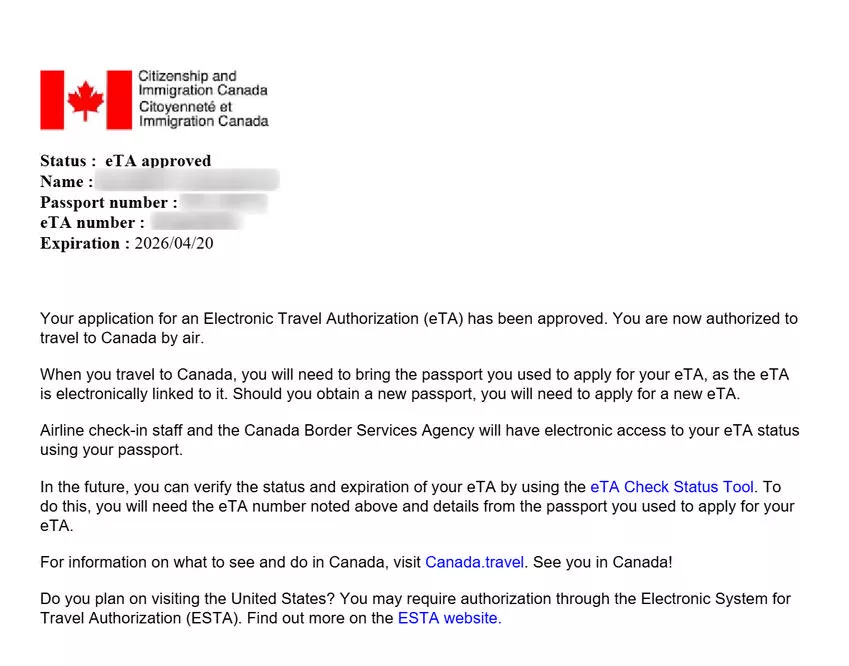
Understanding the full cost of the Canada eTA – including payment methods, potential additional charges, and how it compares to a visitor visa – helps you budget accurately before booking your trip.
Official Canada eTA Fee: CAD $7
The standard government fee for a Canada eTA is CAD $7 (Canadian dollars). This amount is fixed by the Canadian government and applies equally to all nationalities eligible for the eTA program.
Key facts about the eTA fee:
- Amount: CAD $7 per application
- Currency: Charged in Canadian dollars
- Refund policy: Non-refundable regardless of application outcome
- Validity period: Each eTA is valid for up to 5 years or until your passport expires (whichever comes first)
- Multiple entries: A single eTA fee covers unlimited entries to Canada during the validity period
The CAD $7 fee has been in place since the eTA program launched in August 2015. There have been no announced plans to increase the fee as of 2026.
How to Pay for Your Canada eTA
You must pay the eTA fee online using a valid credit or debit card during the application process. The payment is processed through the official Government of Canada website.
Accepted payment methods:
- Visa credit or debit card
- Mastercard credit or debit card
- American Express
- JCB (Japan Credit Bureau)
- UnionPay
Payment tips:
- The charge appears on your statement as a payment to “Government of Canada” or “IRCC”
- Prepaid credit cards may work but are not guaranteed – some are declined by the payment processor
- You cannot pay the eTA fee with cash, bank transfers, or at a Canadian embassy or consulate
- The fee is charged immediately upon submission of your application
If your payment is declined, your application will not be processed. You will need to retry with a different card or contact your bank to authorise the transaction.
Canada eTA Fee vs Canada Visitor Visa Fee
The eTA is significantly cheaper than a Canadian visitor visa (temporary resident visa). Here is a direct comparison:
| Feature | eTA | Visitor Visa |
|---|---|---|
| Cost | CAD $7 | CAD $100 |
| Processing time | Minutes to 72 hours | Weeks to months |
| Application method | Online only | Online or paper |
| Biometrics required | No | Yes (CAD $85 additional) |
| Validity | Up to 5 years | Up to 10 years |
| Eligible nationalities | 60+ visa-exempt countries | All nationalities |
A visitor visa costs CAD $100 per person, and most applicants also need to pay CAD $85 for biometrics (fingerprints and photo). This brings the total visitor visa cost to CAD $185 – more than 26 times the eTA fee.
The eTA exists because citizens of visa-exempt countries do not need a full visitor visa. The eTA is a lighter, faster, and cheaper pre-screening mechanism for travellers who pose lower immigration risk.
Do US Citizens Need to Pay for an eTA?
No. US citizens (US passport holders) do not need an eTA to fly to Canada. US citizens can enter Canada with a valid US passport alone. There is no eTA fee for American travellers.
However, US permanent residents (green card holders) who are citizens of an eTA-eligible country do need an eTA if flying to Canada. They would pay the standard CAD $7 fee.
Permanent residents of Canada are also exempt from the eTA requirement, regardless of their citizenship.
Additional Costs to Consider Beyond the eTA Fee
While the eTA itself is only CAD $7, there are other costs you should factor into your Canada travel budget:
Biometrics: If you previously applied for a Canadian visa and were asked for biometrics, you may have valid biometrics on file. Otherwise, eTA applicants do not need to submit biometrics.
Third-party service fees: Some private websites offer to process your eTA application for an additional service fee ranging from $30 to $100+. These are not affiliated with the Government of Canada. You can apply directly on the official IRCC website for only CAD $7.
Travel insurance: While not mandatory, comprehensive travel insurance is strongly recommended. Costs vary depending on your age, trip length, and coverage level – typically $30-$100 for a short trip.
Flight costs: The eTA is only required for air travel to Canada. If you are entering Canada by land (car, bus, train) or by sea (cruise), you do not need an eTA. US citizens do not need an eTA regardless of travel method.
How the Canada eTA Fee Compares to Other Countries
Canada’s eTA fee is among the lowest electronic travel authorisation fees globally:
| Country | Electronic Authorisation | Fee |
|---|---|---|
| Canada | eTA | CAD $7 (~USD $5) |
| United States | ESTA | USD $21 |
| Australia | ETA | AUD $20 (~USD $13) |
| New Zealand | NZeTA | NZD $17-$23 (~USD $10-$14) |
| Europe (Schengen) | ETIAS | EUR €7 (~USD $8) |
| United Kingdom | ETA | GBP £10 (~USD $13) |
Canada’s eTA is the cheapest among comparable electronic travel authorisation programs. The US ESTA costs three times more, and the UK ETA is almost double.
How to Apply for a Canada eTA
Applying for a Canada eTA is straightforward and takes about 10-15 minutes online:
- Visit the official IRCC website at canada.ca/eta
- Fill out the online form with your personal details, passport information, and travel details
- Answer background questions about your health, criminal history, and immigration status
- Pay the CAD $7 fee using a credit or debit card
- Submit your application and wait for approval
Most eTA applications are approved within minutes. Some applications may take up to 72 hours if additional review is required. In rare cases, you may be asked to submit supporting documents, which can extend processing to several weeks.
Is the Canada eTA Fee Refundable?
No. The CAD $7 eTA fee is non-refundable under all circumstances, including:
- Your application is refused
- You withdraw your application after submission
- Your travel plans change and you no longer need the eTA
- Your passport expires before the eTA does
- You apply twice by mistake (each application requires a separate payment)
Because the fee is so low, the financial risk is minimal. However, double-check all information before submitting to avoid paying twice due to errors.
Frequently Asked Questions About the Canada eTA Fee
How much is the Canada eTA fee in US dollars?
At typical exchange rates in 2026, the CAD $7 eTA fee is approximately USD $5. The exact amount in your local currency depends on your bank’s exchange rate and any foreign transaction fees your card issuer may charge.
Can I pay the Canada eTA fee with a debit card?
Yes. Visa debit and Mastercard debit cards are accepted for eTA payment. The card must be enabled for online international transactions. Some prepaid cards may not work.
Why was I charged more than CAD $7 for my Canada eTA?
If you were charged significantly more than CAD $7, you likely applied through a third-party website that adds a service fee. The official Government of Canada fee is only CAD $7. Always apply directly at canada.ca/eta to avoid extra charges.
Do children need to pay for a Canada eTA?
Yes. Every traveller, including infants and children, needs their own eTA. Each eTA costs CAD $7, regardless of the applicant’s age. Children cannot be added to a parent’s eTA – they need separate applications.
Is the Canada eTA fee the same for all nationalities?
Yes. The CAD $7 fee applies to all eligible nationalities equally. There are no discounts or surcharges based on your country of citizenship. However, not all nationalities are eligible for the eTA – citizens of non-visa-exempt countries must apply for a visitor visa instead.
Does the eTA fee cover multiple trips to Canada?
Yes. A single CAD $7 eTA payment covers unlimited entries to Canada for up to 5 years (or until your passport expires). You do not need to pay again for each trip as long as your eTA remains valid.
What happens if my Canada eTA application is refused?
If your eTA application is refused, the CAD $7 fee is not refunded. You will receive a refusal letter explaining the reason. Depending on the reason for refusal, you may be able to reapply or you may need to apply for a visitor visa instead. Common refusal reasons include criminal inadmissibility, health concerns, or incomplete information.