

Having a criminal record does not automatically bar you from travelling to Canada, but it does make the eTA process more complicated. A past conviction – even a minor one, including a DUI – will likely trigger a manual review of your eTA application, and in many cases lead to a refusal. However, there are legal pathways such as Criminal Rehabilitation and Temporary Resident Permit (TRP) that can restore your eligibility to enter Canada.
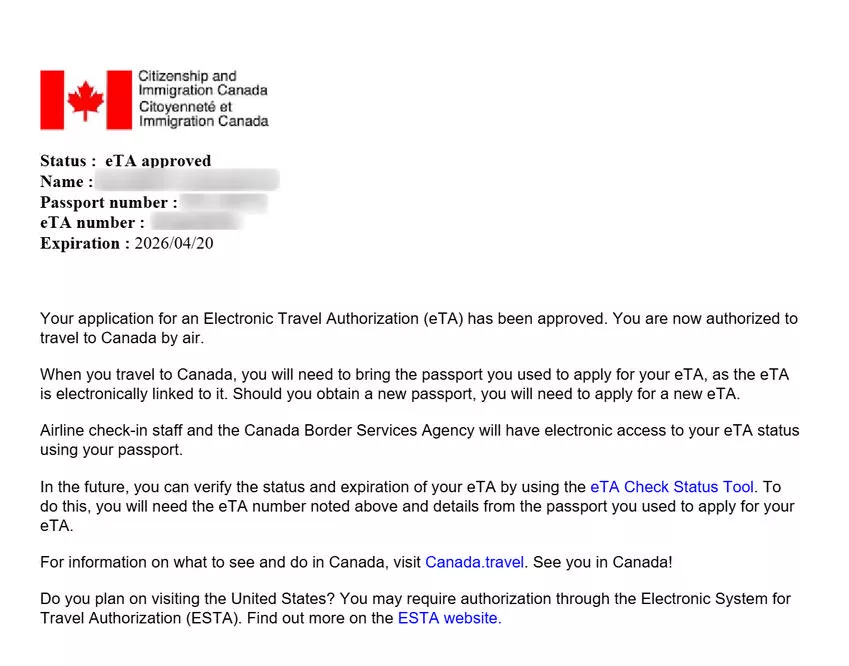
This guide explains how a criminal record affects your Canada eTA application, what offences Canada considers serious, and what options you have if your eTA is refused because of a past conviction.
How Does a Criminal Record Affect a Canada eTA Application?
A criminal record triggers a manual review of your eTA application and can result in a refusal depending on the nature and severity of the offence. The Canada eTA application includes a background question asking: “Have you ever committed, been arrested for, been charged with, or been convicted of a criminal offence in any country?” If you answer “yes,” your application is flagged for manual assessment by Immigration, Refugees and Citizenship Canada (IRCC).
Unlike most eTA applications – which are approved automatically within minutes – an application with a disclosed criminal record requires a human officer to review the details. This review can take anywhere from 72 hours to several weeks, and in some cases longer.
The key factors IRCC considers during this review include:
- The type of offence – violent crimes, drug trafficking, and impaired driving are treated more seriously than minor infractions.
- How long ago the offence occurred – older convictions carry less weight, especially if the applicant has a clean record since.
- Whether the offence is also a crime in Canada – Canada assesses criminality based on its own Criminal Code, not the law of the country where the offence occurred.
- The number of offences – multiple convictions suggest a pattern and reduce the chance of approval.
- Evidence of rehabilitation – character references, completion of rehabilitation programs, and a stable lifestyle since the conviction all help.
If your application is refused because of a criminal record, the refusal email will typically state that you are “criminally inadmissible” to Canada. This does not mean you can never visit Canada – it means you need to take additional steps before you can be admitted.
For more on what happens after a refusal, see our guide on Canada eTA refusals.
What Criminal Offences Make You Inadmissible to Canada?
Canada considers any offence that equates to a serious crime under the Canadian Criminal Code as grounds for criminal inadmissibility. The assessment is based on Canadian law, not the law of the country where the offence was committed. This means a minor offence abroad could still make you inadmissible if the equivalent Canadian offence is considered serious.
Canada divides criminal inadmissibility into two categories:
Serious Criminality
An offence that carries a maximum sentence of 10 years or more in Canada, or that resulted in a sentence of six months or more of imprisonment, falls under serious criminality. Examples include:
- Drug trafficking – possession with intent to distribute, manufacturing, or importing controlled substances.
- Assault causing bodily harm – any assault that results in physical injury.
- Theft over CAD $5,000 – grand theft or fraud involving significant amounts.
- Sexual offences – any sexual assault or related offence under the Canadian Criminal Code.
- Weapons offences – illegal possession, trafficking, or use of firearms.
Criminality
An offence that carries a maximum sentence of less than 10 years in Canada falls under regular criminality. This category includes many offences that applicants might consider minor:
- DUI/DWI (driving under the influence) – This is the most common reason for eTA refusals among travellers. In Canada, impaired driving is treated as a serious criminal offence under Section 320.14 of the Criminal Code, with a maximum sentence of 10 years for offences causing bodily harm.
- Shoplifting/theft under CAD $5,000 – Even petty theft can result in inadmissibility.
- Simple assault – Including minor altercations.
- Mischief – Wilful damage to property.
- Possession of a controlled substance – Small-quantity drug possession.
A critical point: the sentence you actually received does not matter as much as the maximum sentence possible under Canadian law. For example, if you received a fine for a DUI in your home country, Canada still assesses it based on the maximum Canadian penalty, which can be up to 10 years.
| Offence Category | Maximum Sentence in Canada | Common Examples |
|---|---|---|
| Serious Criminality | 10 years or more | Drug trafficking, aggravated assault, fraud over $5,000 |
| Criminality | Less than 10 years | DUI, shoplifting, simple assault, drug possession |
| Hybrid Offences | Varies (prosecuted as indictable or summary) | Most offences are hybrid in Canada |
DUI and the Canada eTA: A Common Problem
A DUI (driving under the influence) conviction is the single most common reason travellers from visa-exempt countries are denied a Canada eTA. Many applicants are surprised by this because DUI is treated as a traffic offence in some countries, but Canada classifies impaired driving as a criminal offence under the Criminal Code.
Since December 2018, Canada increased the maximum penalty for impaired driving from five years to 10 years. This change moved DUI from the “criminality” category to the “serious criminality” category, making it harder for travellers with DUI convictions to enter Canada.
What Counts as a DUI in Canada’s Assessment?
Canada does not look only at whether you were convicted of something called “DUI.” The assessment covers any offence that equates to impaired driving under Canadian law. This includes:
- DUI (Driving Under the Influence) – United States, Australia, and others
- DWI (Driving While Intoxicated) – United States
- Drink driving – United Kingdom, Australia, New Zealand
- Driving with excess blood alcohol – various jurisdictions
- Driving while ability impaired (DWAI) – some US states
- Driving under the influence of drugs – any jurisdiction
- Refusing a breathalyser test – treated as equivalent to impaired driving in Canada
- Wet reckless – a reduced charge in some US states that still equates to impaired driving under Canadian law
How Long Does a DUI Make You Inadmissible?
A DUI conviction makes you criminally inadmissible to Canada indefinitely until you take one of the following steps:
- Deemed Rehabilitation – If your offence occurred more than 10 years ago, you have only one conviction, and the offence did not cause bodily harm, you may be deemed rehabilitated by the passage of time. This is assessed at the border – you do not receive a document confirming rehabilitation.
- Criminal Rehabilitation – You can apply for formal Criminal Rehabilitation if at least five years have passed since the completion of your sentence (including probation, fines, and community service). This is a permanent solution.
- Temporary Resident Permit (TRP) – You can apply for a TRP at any time if you have a compelling reason to travel to Canada. A TRP grants temporary entry for a specific period.
For travellers who need to fly to Canada soon and have a DUI, the TRP is often the fastest option, though it is not guaranteed.
Criminal Rehabilitation: Permanent Solution for Criminal Inadmissibility
Criminal Rehabilitation is the only permanent solution that removes criminal inadmissibility to Canada. Once approved, you no longer need a TRP or any special permission – you can apply for an eTA or visitor visa like any other eligible traveller.
Who Is Eligible for Criminal Rehabilitation?
To apply for Criminal Rehabilitation, you must meet all of the following conditions:
- At least five years have passed since you completed your entire sentence, including any probation, community service, fines, and driving bans.
- The offence you were convicted of would carry a maximum sentence of less than 10 years under Canadian law (for serious criminality, a different process applies).
- You can demonstrate that you have been rehabilitated and are unlikely to reoffend.
How to Apply for Criminal Rehabilitation
Criminal Rehabilitation applications are submitted to a Canadian visa office (embassy or consulate) in your country of residence. The process involves:
- Gather documentation:
- Court records showing the conviction and sentence details.
- Police clearance certificates from every country where you have lived for six months or more since age 18.
- A personal statement explaining the circumstances of the offence and how your life has changed since.
- Character references from employers, community members, or other credible sources.
-
Evidence of rehabilitation (completion of programs, stable employment, community involvement).
-
Complete the application forms:
- Use the IRCC forms for Criminal Rehabilitation (available on the Government of Canada website).
-
Include all supporting documents translated into English or French if they are in another language.
-
Pay the processing fee:
- CAD $200 for offences that fall under “criminality.”
- CAD $1,000 for offences that fall under “serious criminality.”
-
Fees are non-refundable regardless of the outcome.
-
Wait for processing:
- Processing times vary but typically take 12 to 18 months.
- IRCC may request additional documents during the review.
After Criminal Rehabilitation Is Approved
Once your Criminal Rehabilitation is approved, you are no longer criminally inadmissible. You can then apply for a Canada eTA and answer “no” to the criminal history question on future applications. Keep a copy of your approval letter – while it is stored in IRCC’s system, having a physical copy can help if any issues arise at the border.
| Criminal Rehabilitation Details | |
|---|---|
| Eligibility | 5+ years after sentence completion |
| Processing fee | CAD $200 (criminality) / CAD $1,000 (serious criminality) |
| Processing time | 12 to 18 months |
| Outcome | Permanent removal of inadmissibility |
| Where to apply | Canadian visa office (embassy/consulate) |
Temporary Resident Permit (TRP): Short-Term Entry with a Criminal Record
A Temporary Resident Permit allows you to enter Canada for a specific period even if you are criminally inadmissible. Unlike Criminal Rehabilitation, a TRP does not permanently remove your inadmissibility – it is a temporary waiver granted for a particular trip or purpose.
When to Apply for a TRP
A TRP is the right option when:
- You need to travel to Canada before you are eligible for Criminal Rehabilitation (less than five years since sentence completion).
- You have a compelling reason to enter Canada, such as a business meeting, family emergency, conference, or tourism.
- Your Criminal Rehabilitation application is still being processed and you need to travel in the meantime.
TRP Application Process
You can apply for a TRP in two ways:
At a Canadian visa office (before travel):
– Submit your application to the nearest Canadian embassy or consulate.
– Include the same documentation as a Criminal Rehabilitation application (court records, police certificates, personal statement, character references).
– Processing fee: CAD $200 (non-refundable).
– Processing time: varies, typically several weeks to months.
At the Canadian port of entry (upon arrival):
– You can request a TRP at the airport or land border when you arrive in Canada.
– A border services officer assesses your application on the spot.
– You must have all supporting documents with you.
– The officer has full discretion to approve or deny your request.
– This option carries more risk – if denied, you will be turned away and may need to return on the next available flight.
TRP Validity and Limitations
- A TRP is issued for a specific period, from a single entry up to three years.
- It can be renewed if you need to visit Canada again.
- A TRP can be cancelled at any time by a border services officer if circumstances change.
- Holding a TRP does not guarantee entry – you must still satisfy the border officer that your visit is legitimate.
| TRP vs Criminal Rehabilitation | TRP | Criminal Rehabilitation |
|---|---|---|
| Duration | Temporary (single entry to 3 years) | Permanent |
| Processing time | Weeks to months | 12 to 18 months |
| Cost | CAD $200 | CAD $200 to $1,000 |
| Eligibility | Any time | 5+ years after sentence |
| Best for | Urgent travel needs | Long-term solution |
Can You Get a Canada eTA If You Were Charged but Not Convicted?
Being charged with a criminal offence does not automatically make you inadmissible to Canada – a conviction is typically required. However, the eTA application asks specifically about arrests, charges, and convictions. If you were arrested or charged but the charges were dropped, dismissed, or resulted in an acquittal, you should still answer “yes” to the arrest/charge question and provide details.
How Canada Assesses Arrests vs Convictions
- Arrested but charges dropped: Generally, this does not result in inadmissibility. However, your application will be manually reviewed, and you should be prepared to provide court documents showing the charges were dropped or dismissed.
- Charged but acquitted: An acquittal means you were found not guilty. This does not make you inadmissible, but you must still disclose the arrest and charge on your eTA application.
- Conditional discharge: In some countries, a conditional discharge means you are found guilty but do not receive a formal conviction if you meet certain conditions. Canada may still consider this a conviction depending on the equivalent Canadian offence.
- Pardoned or expunged offences: Canada does not automatically recognize pardons or expungements from other countries. If your record has been sealed or pardoned in your home country, you must still disclose it on your eTA application. Canada assesses the underlying conduct, not the status of the record in the foreign jurisdiction.
What If You Have No Documentation?
If you cannot obtain court records or police certificates for an old charge, explain the situation in your application. IRCC may accept alternative evidence such as:
- A letter from a lawyer confirming the outcome of the case.
- A sworn affidavit describing the incident and its resolution.
- A background check from your national police authority showing a clean record (which may indicate the charge did not result in a conviction).
The important thing is to be honest. Lying about a criminal history – even one that would not have resulted in inadmissibility – can lead to a refusal for misrepresentation, which is a much more serious problem.
What Happens If Your eTA Is Refused Due to a Criminal Record?
If your Canada eTA is refused because of a criminal record, the refusal email will state that you are criminally inadmissible to Canada. You cannot appeal an eTA refusal, but you have several options to still travel to Canada.
Your Options After an eTA Refusal
-
Apply for Criminal Rehabilitation – If at least five years have passed since you completed your sentence, apply for formal Criminal Rehabilitation. Once approved, your inadmissibility is permanently removed and you can apply for an eTA again.
-
Apply for a Temporary Resident Permit (TRP) – If you need to travel to Canada before you are eligible for Criminal Rehabilitation, or if you have a compelling reason to visit, apply for a TRP at a Canadian visa office.
-
Apply for a Visitor Visa – The visitor visa application process allows you to submit additional documentation that the eTA system does not support. You can include court records, personal statements, and character references as part of your visa application. The processing time for a visitor visa is typically several weeks to months, and the fee is CAD $100.
-
Wait for Deemed Rehabilitation – If your offence was a single conviction for a non-serious crime and more than 10 years have passed since you completed your full sentence, you may be deemed rehabilitated by the passage of time. However, this assessment is made at the border – there is no formal application or document.
Can You Reapply for an eTA After a Refusal?
Yes, you can reapply for a Canada eTA after a refusal. However, simply reapplying without addressing the underlying inadmissibility will result in another refusal. You should only reapply after:
- Your Criminal Rehabilitation has been approved.
- Circumstances have changed (e.g., you now qualify for deemed rehabilitation due to the passage of time).
- You have new information or documentation that was not available during your first application.
There is no waiting period to reapply, but repeated unsuccessful applications may raise additional concerns with IRCC.
For a detailed breakdown of all refusal reasons and next steps, see our guide on Canada eTA refusals.
How to Disclose a Criminal Record on Your eTA Application
Disclosing a criminal record on your Canada eTA application is mandatory – failing to do so is considered misrepresentation and carries severe consequences. The eTA form asks: “Have you ever committed, been arrested for, been charged with, or been convicted of a criminal offence in any country?” You must answer honestly.
Step-by-Step: Answering the Criminal History Question
Step 1: Answer “Yes” to the criminal history question.
If you have any criminal history – arrest, charge, or conviction – select “Yes.” Do not assume that a minor offence, a pardoned offence, or an old offence does not count. Canada’s assessment is based on Canadian law, and many offences that seem minor elsewhere are treated seriously in Canada.
Step 2: Be prepared for manual review.
A “yes” answer does not automatically result in a refusal. Your application enters a manual review queue where an IRCC officer assesses your specific situation. The officer considers the type of offence, how long ago it occurred, your sentence, and evidence of rehabilitation.
Step 3: Provide supporting documents if requested.
IRCC may contact you by email to request additional documentation. Common requests include:
- Court records showing the offence, conviction, and sentence.
- Police clearance certificates from your country of residence.
- A personal statement explaining the circumstances and rehabilitation.
- Proof that your sentence has been fully completed (fines paid, probation ended, community service done).
Step 4: Respond promptly.
IRCC typically gives you 30 days to submit requested documents. Missing this deadline can result in a refusal based on insufficient information.
Tips for Disclosing a Criminal Record
- Over-disclose rather than under-disclose. If you are unsure whether an incident counts as a criminal offence, declare it. An officer can assess it and determine it is not relevant – but hiding it can result in a misrepresentation finding.
- Include context. A personal statement explaining the circumstances (e.g., a single mistake made decades ago) helps the officer understand your situation.
- Show rehabilitation. Evidence of a stable life since the offence – steady employment, family responsibilities, community involvement – demonstrates low risk of reoffending.
- Get legal advice. If your criminal history is complex or you are unsure about Canadian equivalences, consult a Canadian immigration lawyer before applying.
Frequently Asked Questions About Canada eTA with Criminal Record
Can I get a Canada eTA with a DUI on my record?
A DUI conviction typically results in a Canada eTA refusal because Canada treats impaired driving as a serious criminal offence. Since December 2018, the maximum penalty for DUI in Canada is 10 years, placing it in the “serious criminality” category. If you have a DUI, you may need to apply for Criminal Rehabilitation (available five years after sentence completion) or a Temporary Resident Permit (TRP) before you can enter Canada.
Does a criminal record from 20 years ago still affect my eTA application?
Yes, a criminal record can affect your eTA application regardless of how long ago the offence occurred. Canada does not have a time limit on criminal inadmissibility. However, if more than 10 years have passed since you completed your entire sentence for a single non-serious offence, you may qualify for deemed rehabilitation, which is assessed at the border. For offences that qualify as serious criminality, you need formal Criminal Rehabilitation regardless of how much time has passed.
What if I was arrested but never convicted – will my eTA be refused?
Being arrested without a conviction generally does not make you criminally inadmissible to Canada. However, you must still answer “yes” to the arrest question on the eTA form. Your application will enter manual review, and you may be asked for documentation showing the charges were dropped, dismissed, or resulted in an acquittal. If you can provide this documentation, your eTA is likely to be approved.
Does Canada check criminal records from other countries?
Yes. Canada has access to international criminal databases, including Interpol records, and shares information with countries such as the United States, United Kingdom, Australia, and New Zealand through intelligence-sharing agreements. IRCC also cross-references applications with US criminal databases through arrangements with US Customs and Border Protection. Do not assume that a conviction in one country will not be visible to Canadian authorities.
Can I enter Canada by land instead of flying to avoid the eTA check?
If you are entering Canada by land (e.g., driving from the United States), you do not need an eTA. However, you still need a valid passport, and you are still subject to the same criminal inadmissibility rules. A border services officer at a land crossing will ask about your criminal history, and you can be denied entry if you are criminally inadmissible. Entering by land does not bypass Canada’s criminal screening – it only bypasses the eTA requirement.
How long does Criminal Rehabilitation take to process?
Criminal Rehabilitation applications typically take 12 to 18 months to process, though processing times can vary depending on the complexity of the case and the volume of applications at the visa office. During this time, IRCC reviews your documentation, assesses the equivalency of your offence under Canadian law, and evaluates evidence of rehabilitation. You can apply for a Temporary Resident Permit (TRP) in the meantime if you need to travel to Canada urgently.
What is the difference between Criminal Rehabilitation and a TRP?
Criminal Rehabilitation permanently removes your criminal inadmissibility to Canada. Once approved, you can apply for an eTA or visitor visa normally. A Temporary Resident Permit (TRP), by contrast, grants temporary entry for a specific period (up to three years) without removing the underlying inadmissibility. Criminal Rehabilitation requires at least five years since sentence completion; a TRP can be applied for at any time. Criminal Rehabilitation costs CAD $200 to $1,000; a TRP costs CAD $200.
Will a juvenile or youth offence make me inadmissible to Canada?
Canada assesses criminal inadmissibility based on the Canadian equivalent of the offence, not the age of the offender at the time. If your juvenile offence is equivalent to an offence under the Canadian Youth Criminal Justice Act, it may not result in inadmissibility. However, if the equivalent Canadian offence is one that would be prosecuted under the adult Criminal Code, you could still be found inadmissible. This is a complex area – consult a Canadian immigration lawyer if you have a juvenile conviction and plan to travel to Canada.
Can I sponsor a family member for Canadian immigration if I have a criminal record?
Having a criminal record does not automatically prevent you from sponsoring a family member for Canadian immigration, but it depends on the nature of the offence. If you were convicted of a sexual offence or an offence against a family member, you cannot sponsor. For other offences, eligibility depends on the specific circumstances. This is separate from the eTA process, but if you are criminally inadmissible to Canada, it can affect your ability to participate in sponsorship applications.
I answered “no” to the criminal question but my eTA was refused – why?
If you answered “no” to the criminal history question but your eTA was still refused, it may be because IRCC found records of a criminal offence through international databases or intelligence-sharing agreements. Answering “no” when you have a criminal record constitutes misrepresentation, which is a serious offence under Canadian immigration law. Misrepresentation can result in a five-year ban from Canada. If this has happened, consult a Canadian immigration lawyer immediately.
Do I need a lawyer to apply for Criminal Rehabilitation?
You are not required to hire a lawyer to apply for Criminal Rehabilitation, but it is strongly recommended for complex cases. A Canadian immigration lawyer can help you gather the correct documentation, frame your personal statement effectively, and navigate the equivalency assessment (matching your offence to Canadian law). For straightforward cases with clear documentation and a single minor offence, you may be able to complete the application yourself using the IRCC forms and guidelines.